Connecting Researchers and Junior Academics with Purpose
AI-driven compatibility based on interests, goals, availability, and skillset
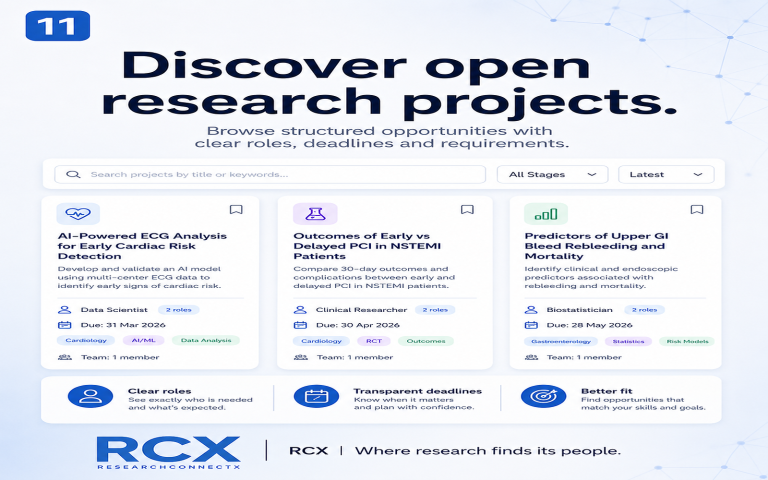
Examples of successful matches
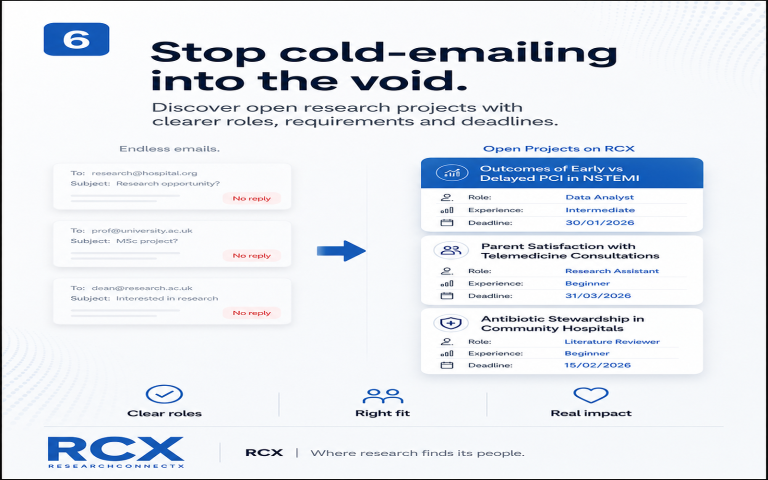
How this reduces time wasted on cold outreach
One of the most time-consuming aspects of getting involved in research is finding someone willing to involve you back. Junior researchers send dozens of emails, offer to help “in any capacity,” and still hear nothing but silence or worse, vague rejections. It’s not for lack of enthusiasm; it’s the absence of a system that connects people based on real potential for collaboration. This is exactly where ResearchConnectX (RCX) changes the game.
RCX uses an AI-driven matchmaking algorithm not for dating, but for data-driven research collaboration. You input your interests, your goals (maybe you want to publish, maybe you’re looking to assist and learn), your availability, and your skillset. On the other end, principal investigators, registrars, and academic leads do the same. RCX then matches both parties based on mutual compatibility, rather than vague networking or blind outreach.
Take Dev, a foundation year doctor with an interest in respiratory medicine but no prior publications. On RCX, he marks his availability and interest in meta-analyses. He gets matched with a consultant leading a multi-centre review who needs someone to screen abstracts. Within days, he’s contributing to meaningful work. No cold emails. No awkward self-promotion. Just the right match.
Or Maya, a final-year medical student who knows her way around Python and data visualisation. She’s matched to a health informatics project that needed someone to build dashboards. A task she never knew existed in research, but now she’s the key data contributor and a co-author.
RCX eliminates the randomness and rejection that so many juniors associate with the start of their research journey. Instead of throwing darts in the dark, you’re guided by a system that recognises where your time and skills can have the most impact. The result? More completed projects. More meaningful mentorship. More research that moves forward and faster.